


Recycling advertising graphics – how to give them a second life after the season

Many companies still treat graphics as single-use materials. When a campaign ends, the print disappears from circulation, even though it could easily get a second chance. The same goes for structures – one frame can serve you across multiple events if you simply give it the opportunity. See how you can reuse materials you already own – at events and beyond.
Why think about a second life for graphics?
A graphic doesn’t have to be a one-time message that finishes its job on the last day of the campaign. Many companies treat it as disposable, even though it can continue working – in a different place, a different context, with a different goal. Giving up on reusing prints means their value disappears faster than it should. Every print is a resource, not a seasonal extra, and the sooner you start viewing it this way, the easier it becomes to plan budgets and future activities.
Instead of putting fabrics away on a warehouse shelf, you can give them a new role: as backdrops, décor, or elements of office or showroom scenography. This approach reduces costs while helping maintain visual consistency across multiple promotional spaces, not just exhibition stands.
Thinking about a second life for graphics is also a way to plan smarter. When you know the frames stay with you for years and the prints can be swapped or moved into other spaces, you begin designing campaigns with more freedom. Every element has its future use.
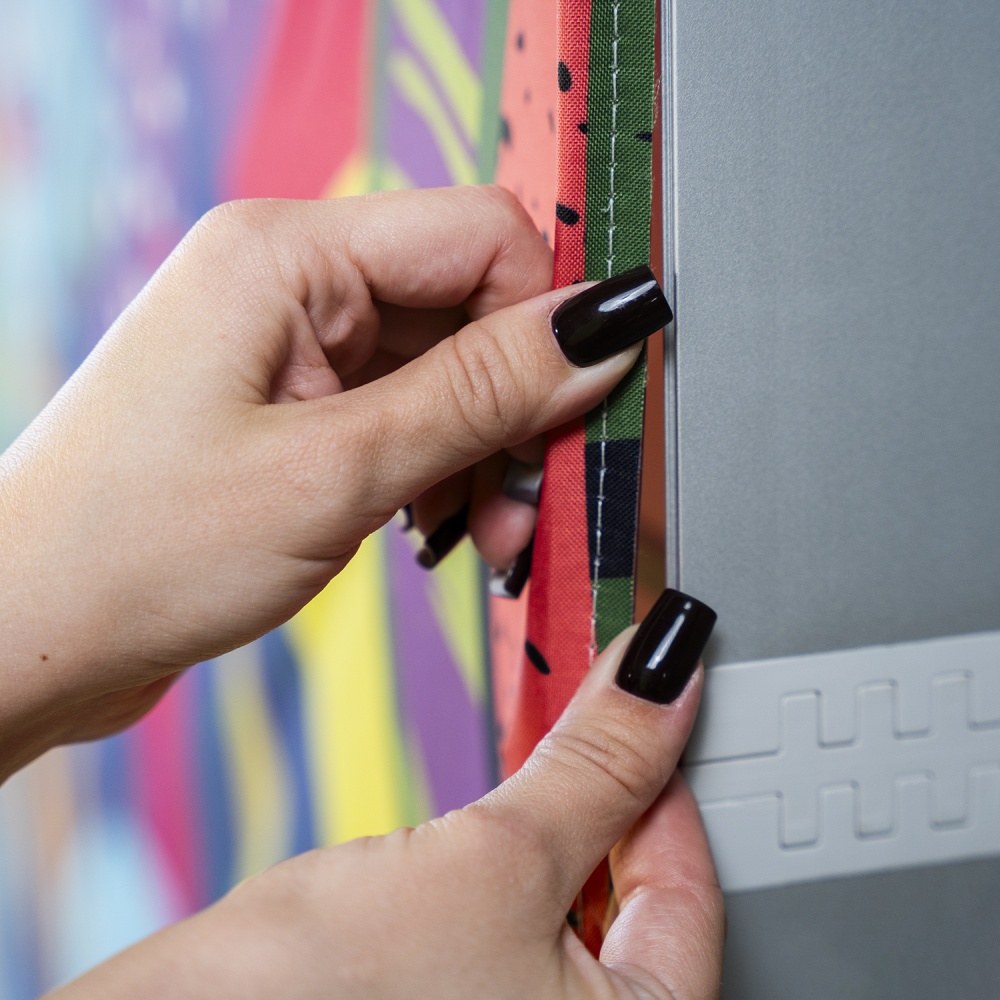
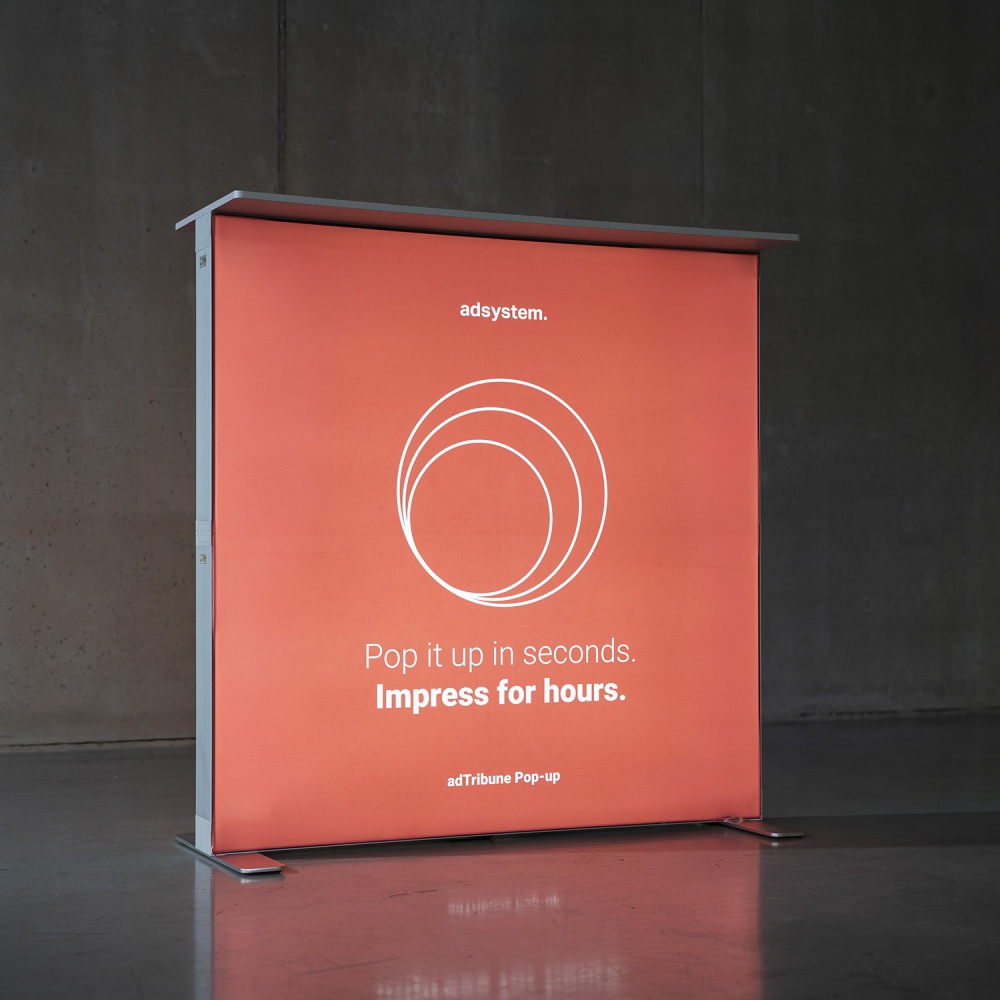
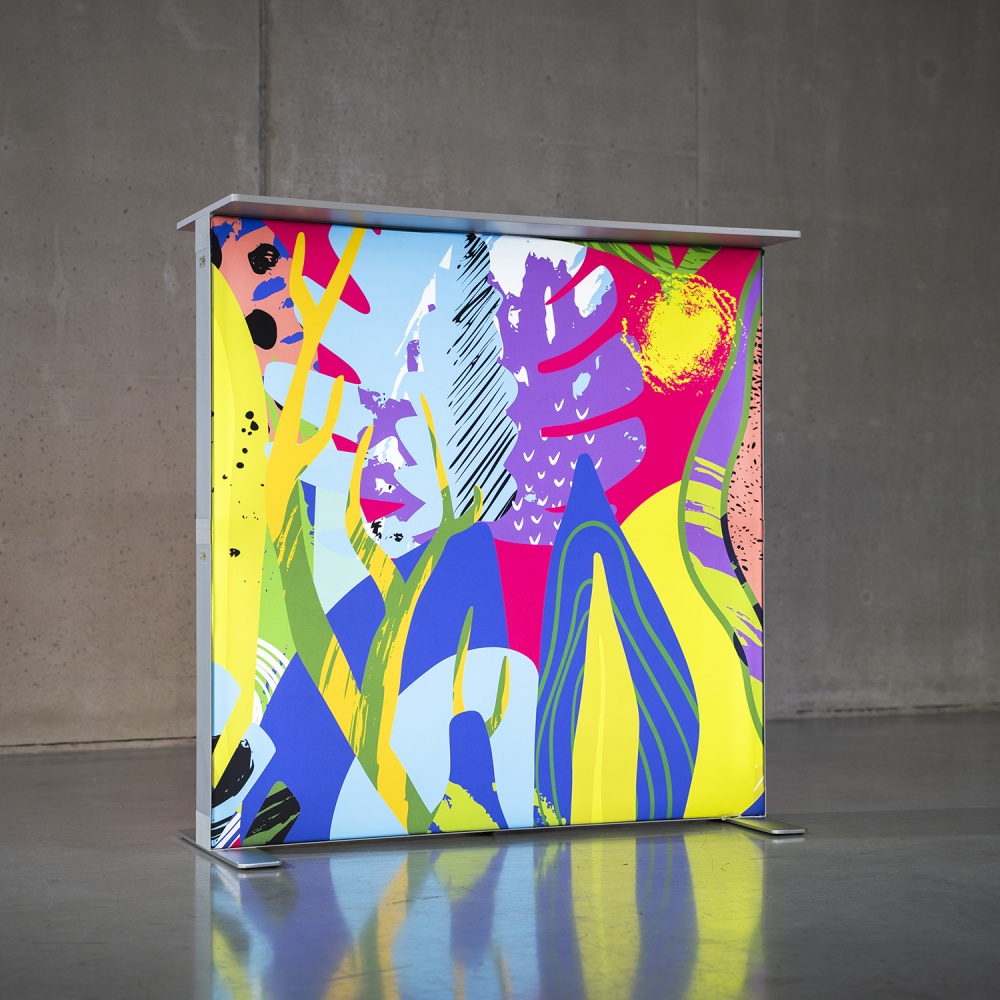
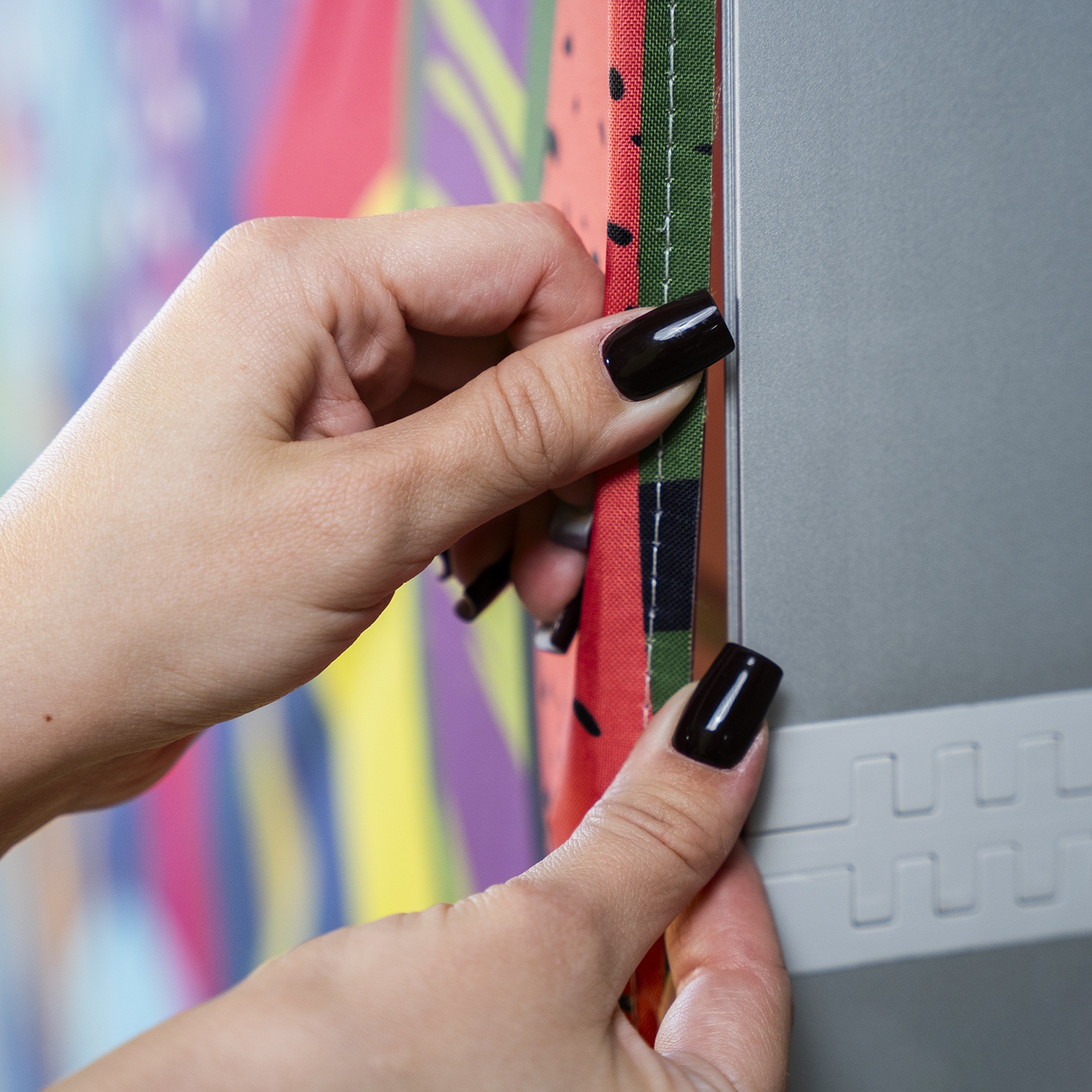
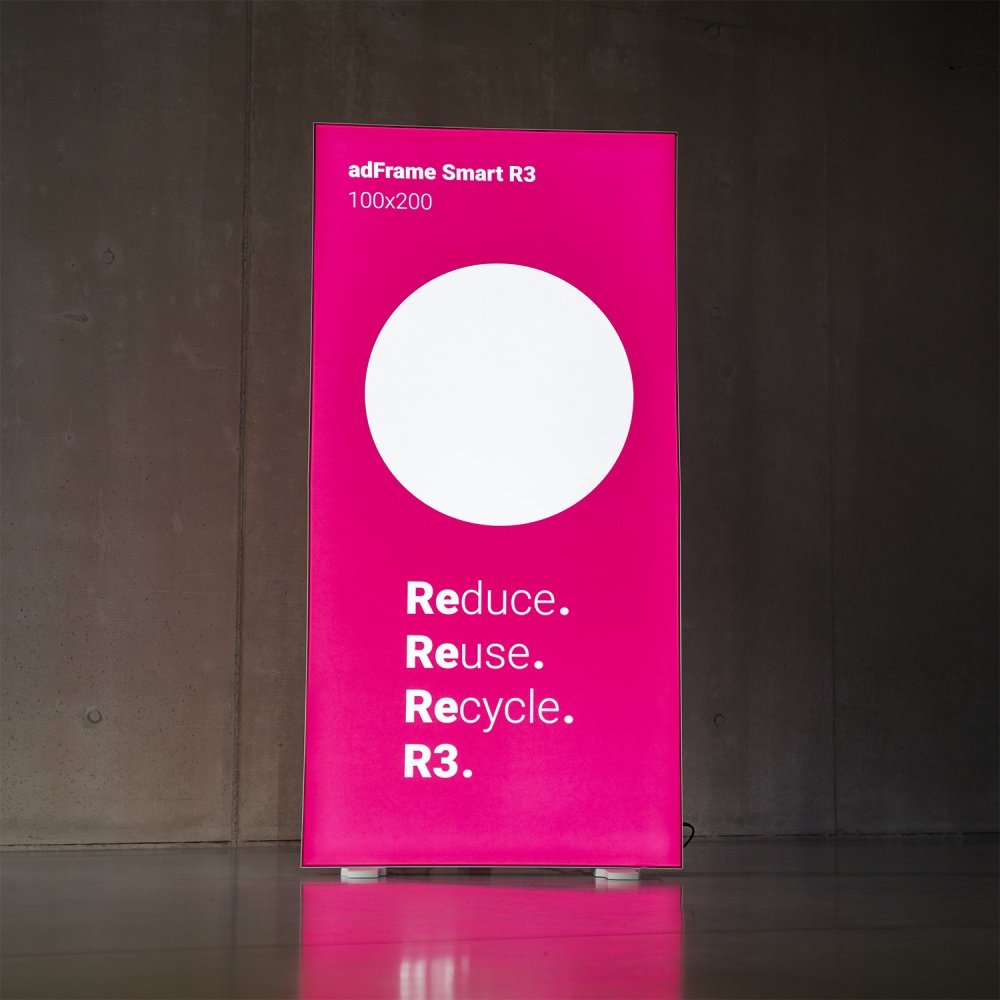
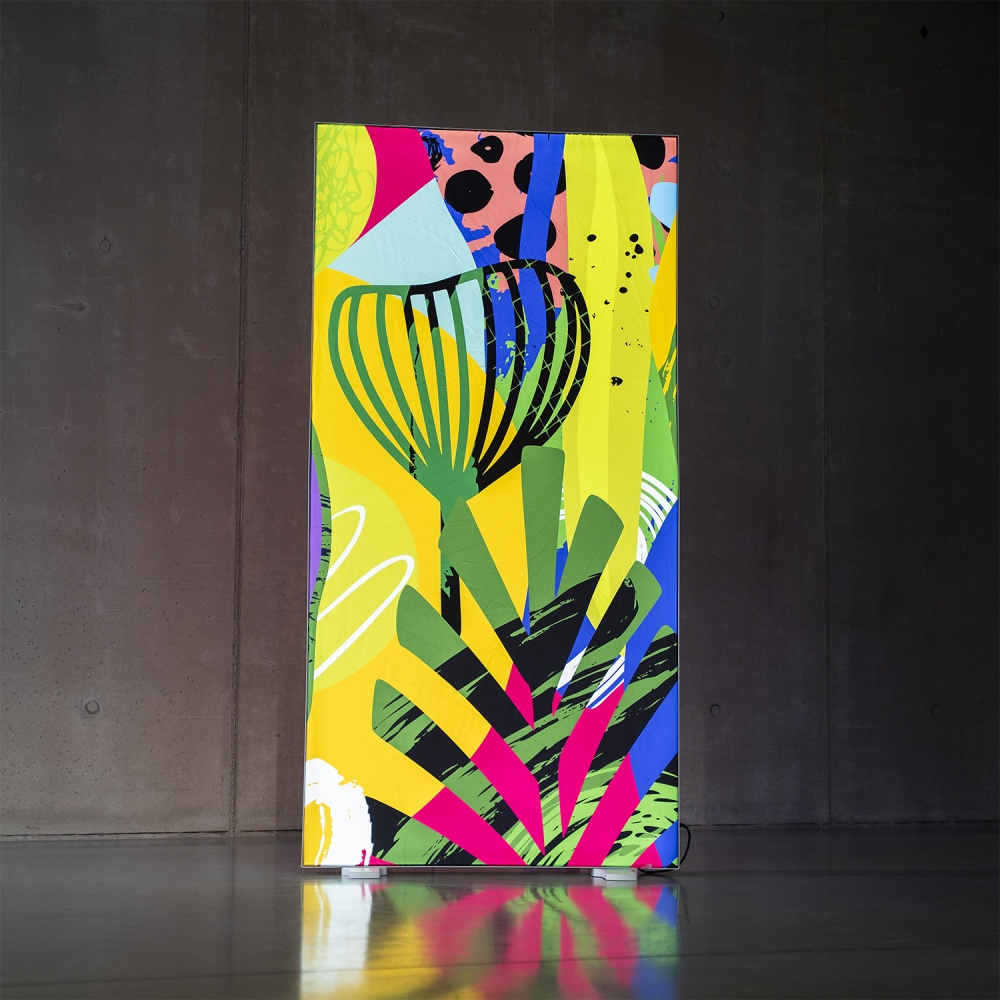
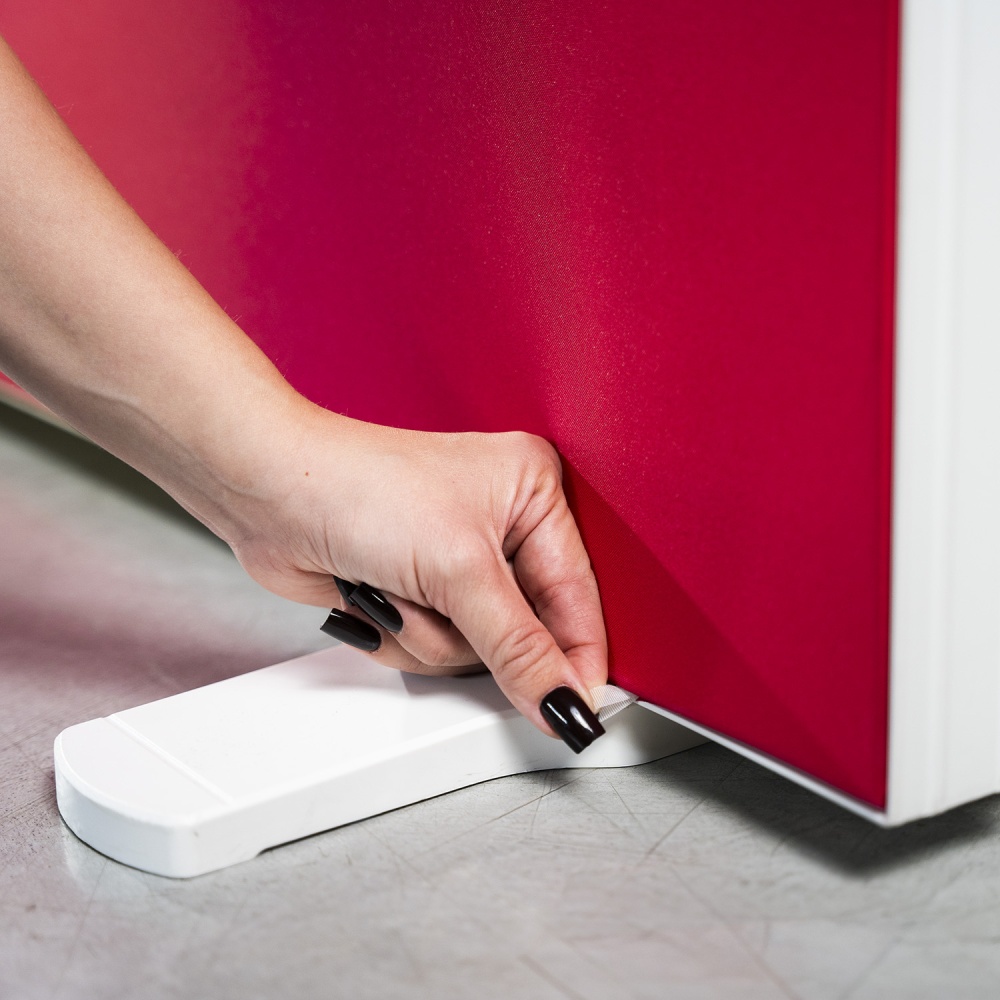
Interchangeable prints are easy to handle, although each system works a bit differently. On display walls, the fabric is stretched over the frame and fastened at the bottom. In lightboxes, the graphic has a silicone keder sewn in that you insert into the frame’s groove.
Construction and graphics – sometimes together, sometimes apart
Many people treat the frame and the graphic as an inseparable set. When they buy one, they buy the other. This belief limits flexibility and increases costs. In exhibition systems, however, both elements operate on their own timeline. The frame stays with you for years, while the graphic changes whenever your communication does. That’s exactly where the convenience lies.
Separating these two elements gives you freedom. The construction becomes a base you can reuse across different events, while the graphics serve as the changeable message. Thanks to this, each event doesn’t require rebuilding everything from scratch. You have a ready-made structure that you can easily adapt to the next project.
The second life of exhibition systems – practical ideas
Let’s assume you order a lightbox for a trade show. You choose the frame and a graphic featuring your logo and message that best represents your offer. The lightbox travels with you to the event, attracts attention, completes its mission and returns to your office. What next?
Such a lightbox works perfectly in an office if you host clients there. Simply place it at the reception or entrance to immediately signal that they’re in the right place. It gives the space a professional touch, reinforces your brand identity and organizes the environment – all without extra cost.
And if you don’t invite clients to the office? You can use the lightbox differently. It works great as a backdrop for product photos, social media materials or video calls. This way, every frame looks more professional and your visual communication stays consistent. A single frame can become your mini-studio.
You can also go in the opposite direction. If you already have a frame and graphic from a previous event and a new campaign or trade show edition is coming up, simply go to our website, find the same product and order a new print. You adjust it to your current product, season, or target audience.
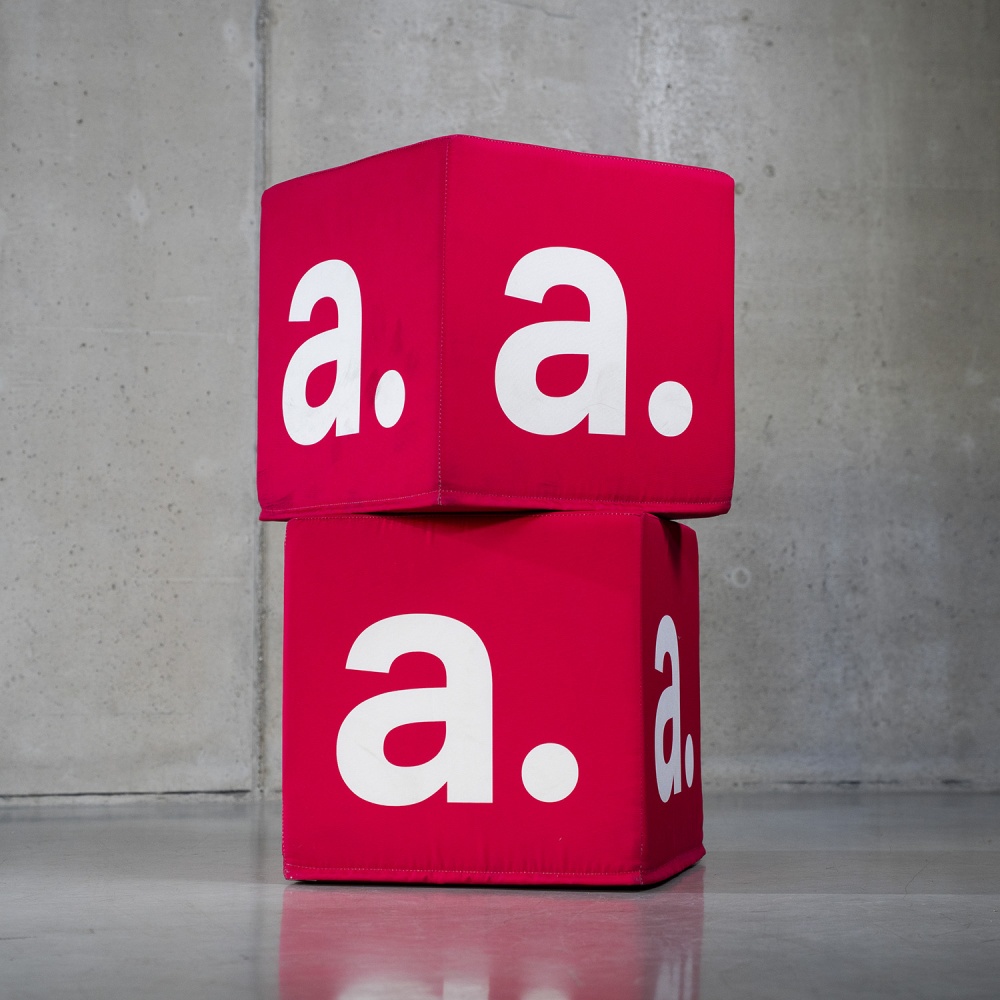
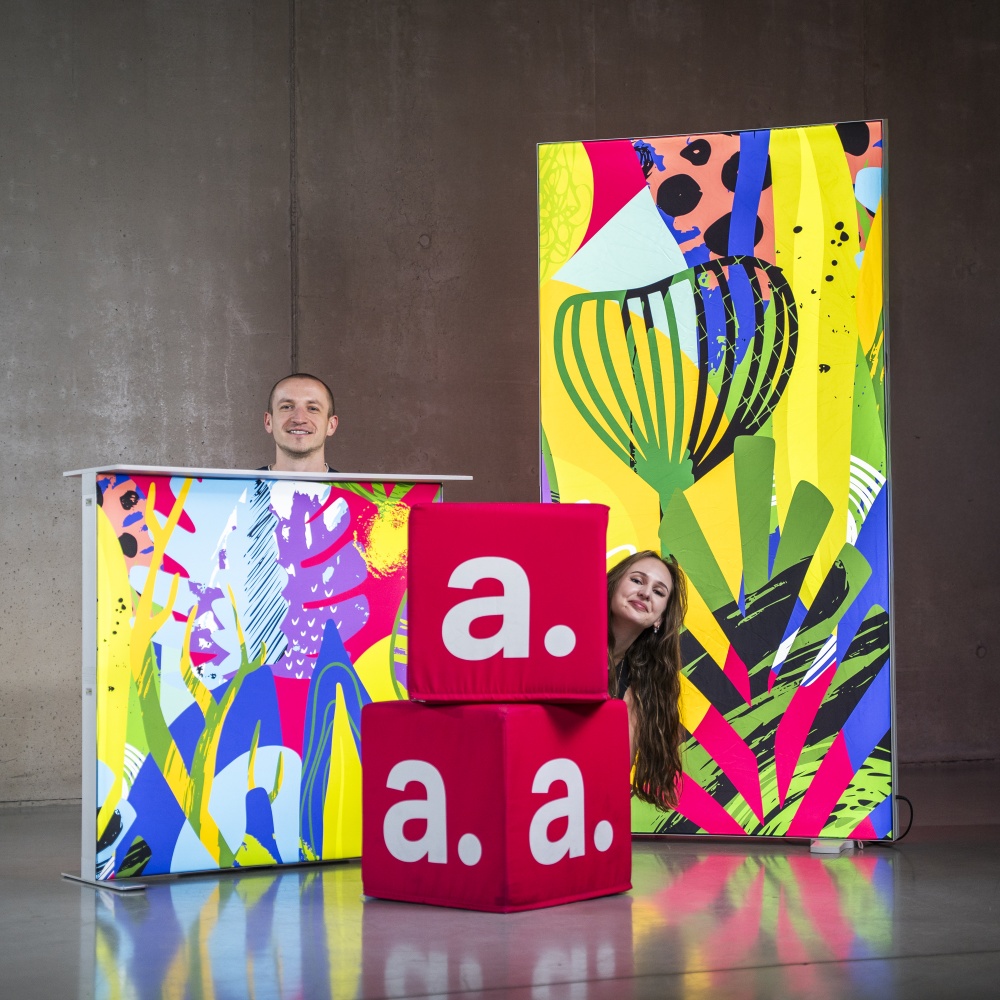
One wall, one lightbox or even a cube pouf can appear once at an event, once in an office, and once as a film set piece. One graphic can be moved to another space and become the star there. The key is to use materials wisely and see more than just one campaign in them.
What to do with graphics you won’t reuse?
Some graphics simply cannot be reused. They don’t fit the new campaign, contain outdated content or cannot be incorporated into other activities in a meaningful way. This is the moment to consider how to handle the material responsibly. Polyester textiles can be recycled – they will re-enter circulation in another form. If you come across materials that cannot be recycled, the best solution is to hand them over to a professional disposal service.
You can also take a more creative route. We have often reused scraps and old prints by sewing them into bags. They looked great, and the material got a second life in a completely different form. Such ideas are a simple way to reduce waste while being surprisingly fun.
The key insight is that a graphic doesn’t have to end up in the bin. Even if it doesn’t return to a trade show stand, it can come back in another form – as raw material, a gadget, or part of a creative project.


- PrintRecycling advertising graphics – how to give them a second life after the season
Many companies still treat graphics as single-use materials. When a campaign ends, the print disappears from circulation, even though it could easily get a second chance. The same goes for structures – one frame can serve you across multiple events if you simply give it the opportunity. See how you can reuse materials you already own – at events and beyond.
Read more
- Print
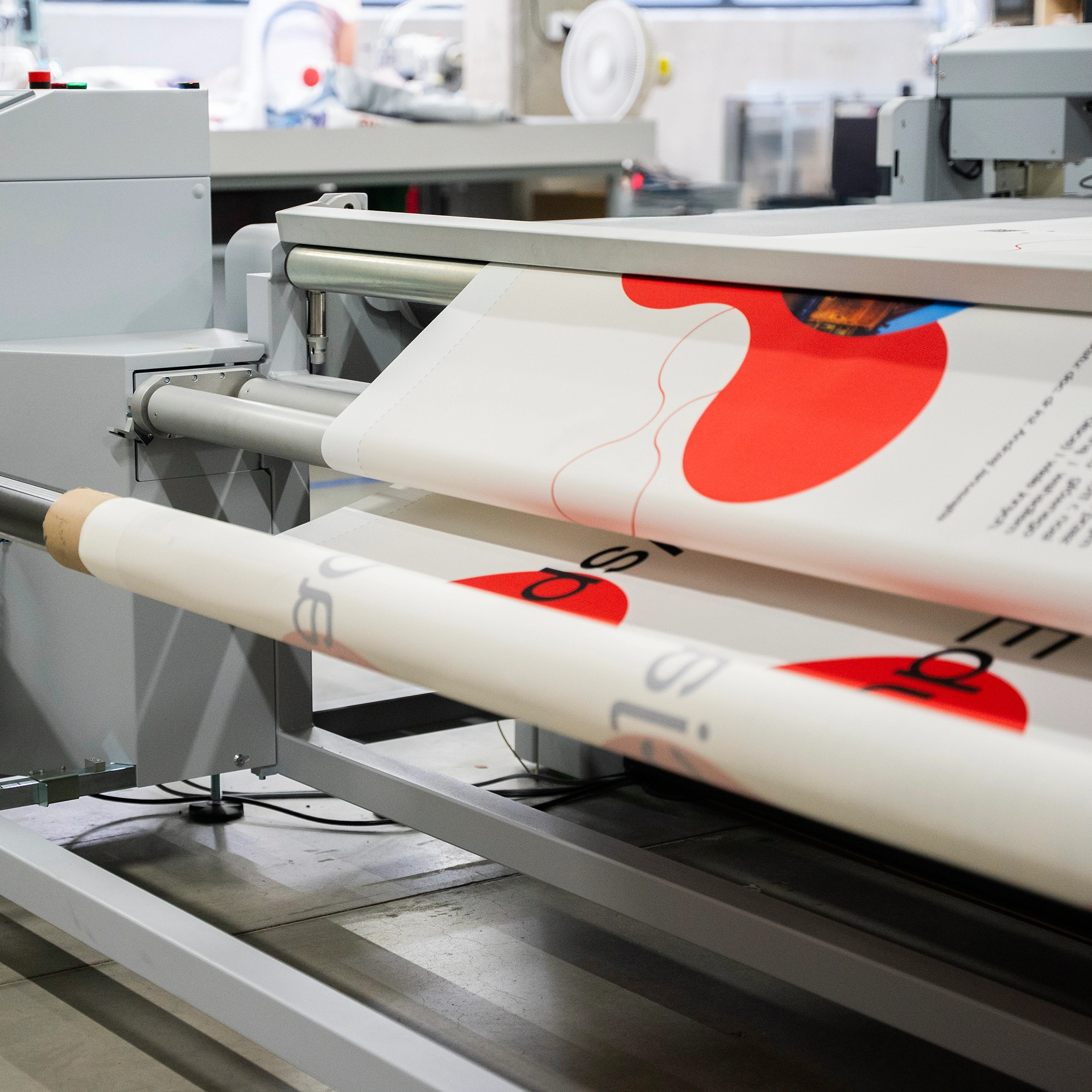 A revolution in lightbox production – faster and more precise
Don’t like the last-minute rush before trade shows? Neither do we. That’s why instead of racing against time, we decided to get ahead of it. We’ve introduced a new device to our machine park – the ZUND cutting plotter. ZUND automates the cutting process, increases precision, and minimizes the risk of errors. See how this new machine can speed up the production of your next order.
Read more - Print
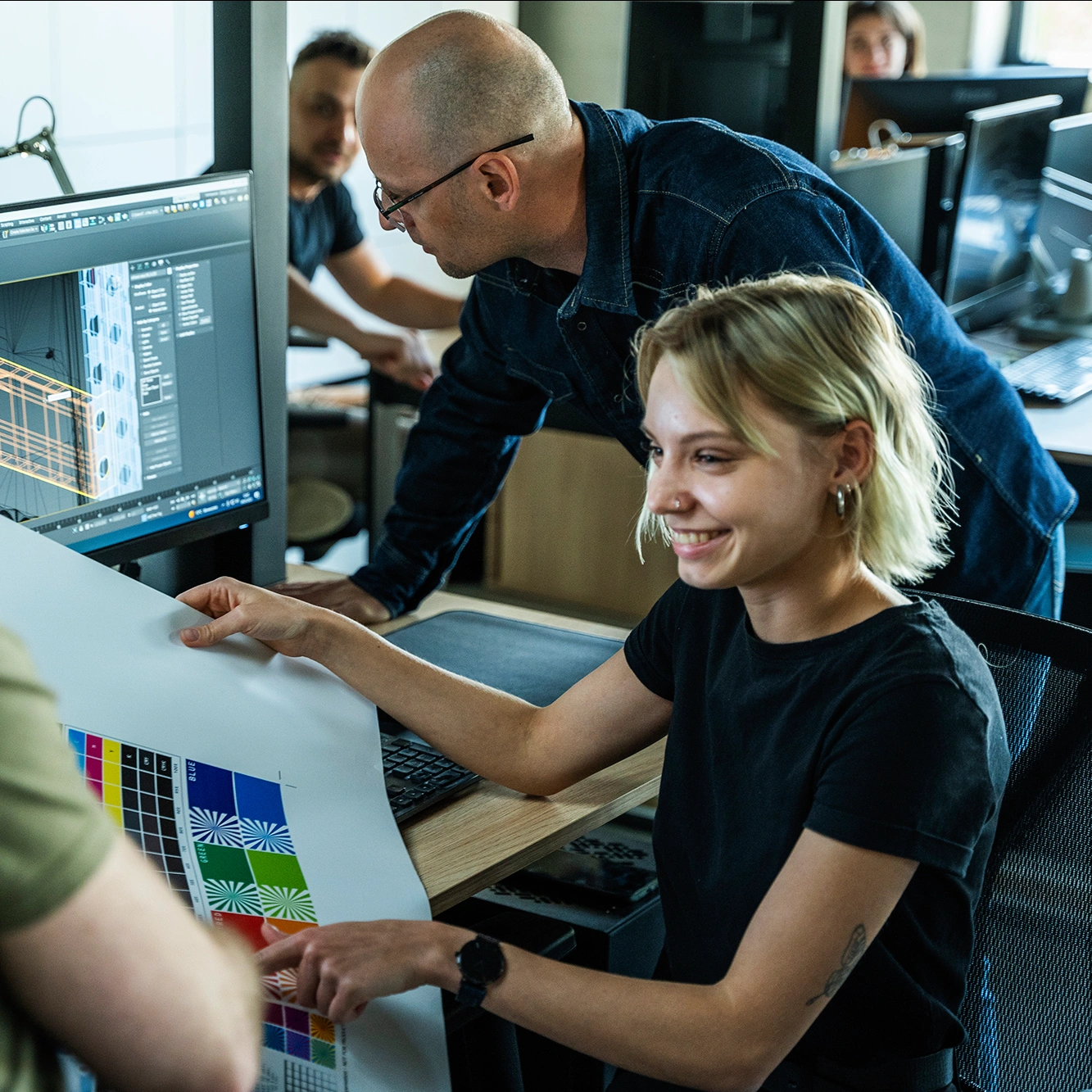 How to prepare matched files? Step-by-step guide
Are you planning an exhibition made up of several elements of a system but with one shared graphic? Find out how to correctly prepare matched files to avoid misalignments and corrections before printing.
Read more - MarketingPrint
 AR technology: from visualization to implementation
AR technology is a modern support tool in the purchasing process. It helps you avoid shopping mishaps and prevents you from buying the proverbial pig in a poke. Find out what this technology is all about and how it can support you when shopping online.
Read more - Print
 File verification: the key to seamless order fulfillment
Not sure if your files meet the guidelines? At adsystem, we use an advanced File Checker system along with the expertise of our graphic designers to eliminate technical errors at the very beginning of the process. Find out what our verification covers and what you should pay attention to as a client.
Read more