


LED counters as a brand touchpoint

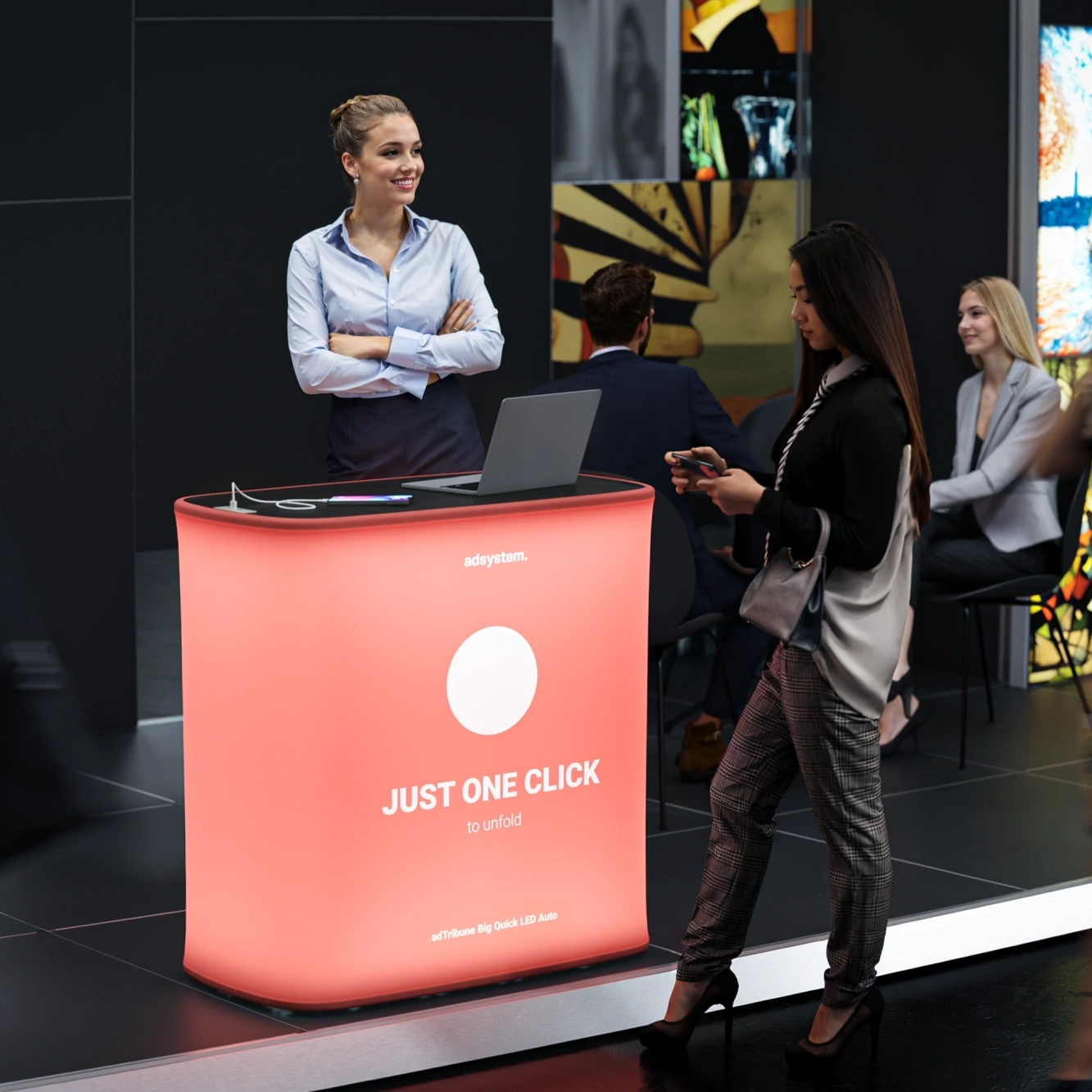
A promotional counter is often treated as an add-on to the booth. Something that “has to be there” because brochures need a place. Meanwhile, it’s right at the counter that the first, most natural contact with the brand happens. If it doesn’t do its job, it’s hard to expect a longer conversation. What makes a counter genuinely support interaction with visitors? See how to choose a counter for your booth so it works together with the rest of the display.
The promotional counter as an interaction hub – a micro-moment of contact with your brand
The counter is one of the first elements visitors physically interact with at a booth. It’s where they stop for a moment, put down materials, or ask the first question. This moment is brief, but very specific. How the counter looks and where it’s placed determines whether the interaction feels natural or ends after a few seconds.
In a trade fair space, it also acts as a reference point. Visitors look for a place that clearly communicates where they can approach and start a conversation. A well-designed counter organizes traffic at the booth and makes that first step easier, without pressure or hesitation about where to stand.
This is where most short, spontaneous conversations take place. Often without presentations or lengthy preparation. Clarity of message and comfort of interaction matter most. That’s why the form of the counter directly affects how the brand is perceived in the very first moment of contact.
Classic counter vs. LED counter – the advantage of lighting
Classic counters are constructions many people know and recognize. Graphics are printed on rigid PVC panels attached with Velcro, and the whole unit can be fitted with wheels or remain stationary. It’s a simple, predictable solution, especially where quick service and frequent repositioning within the booth are important.
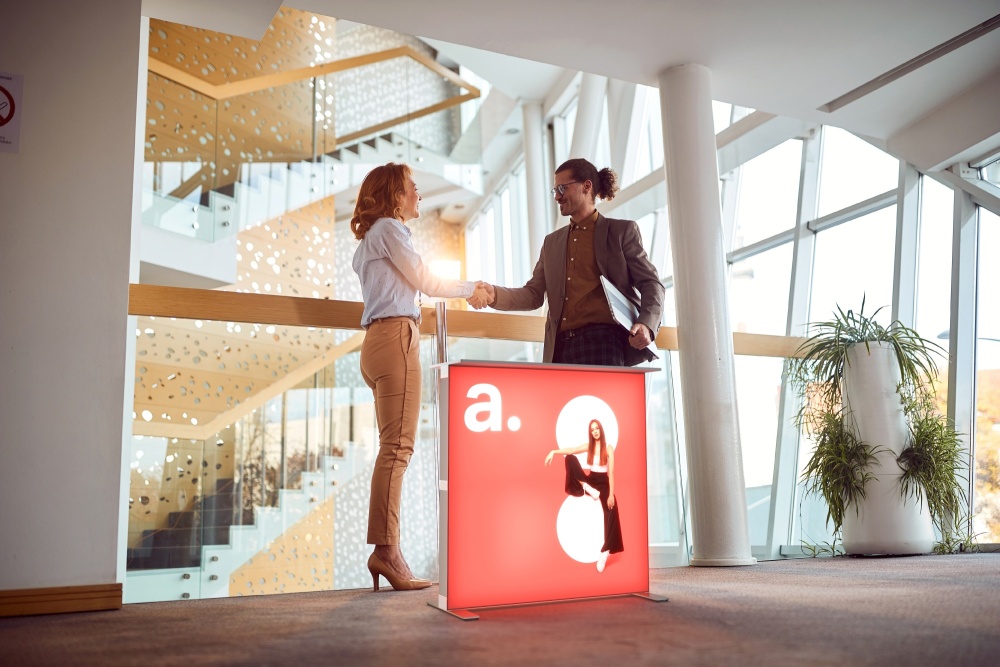
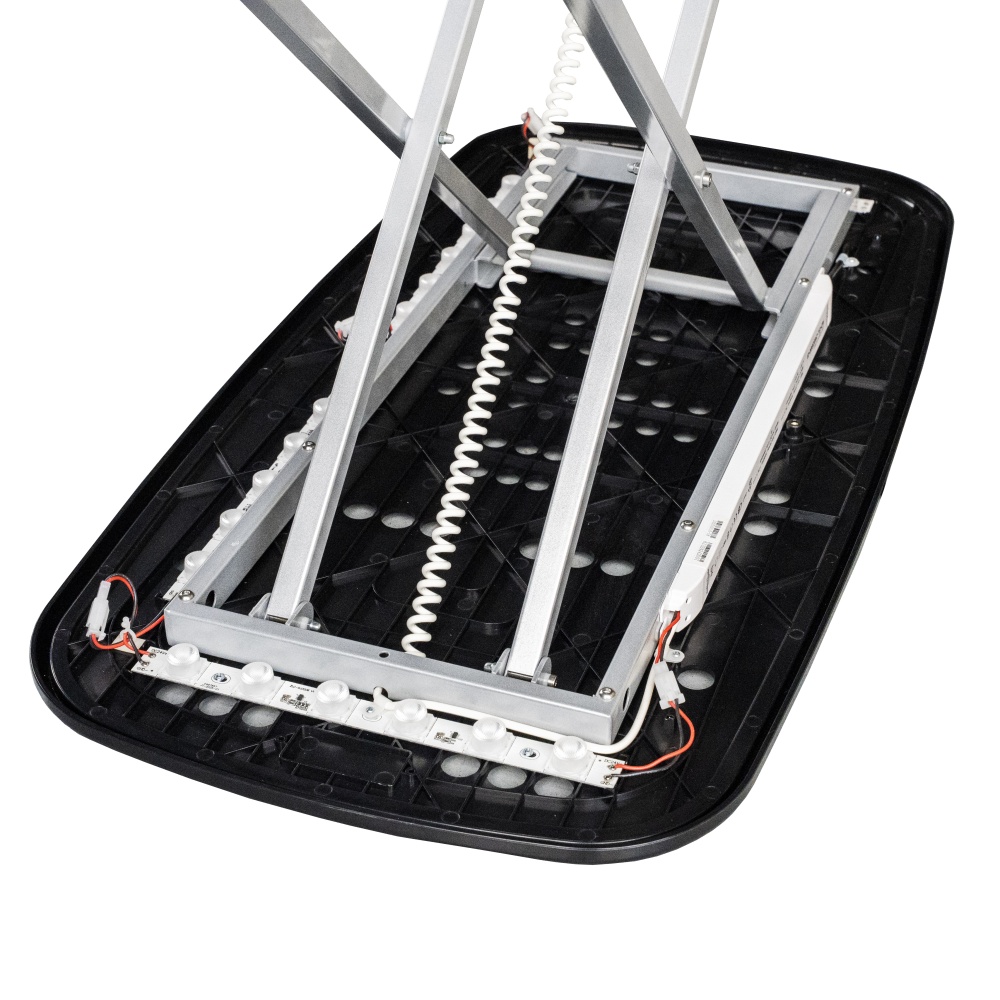
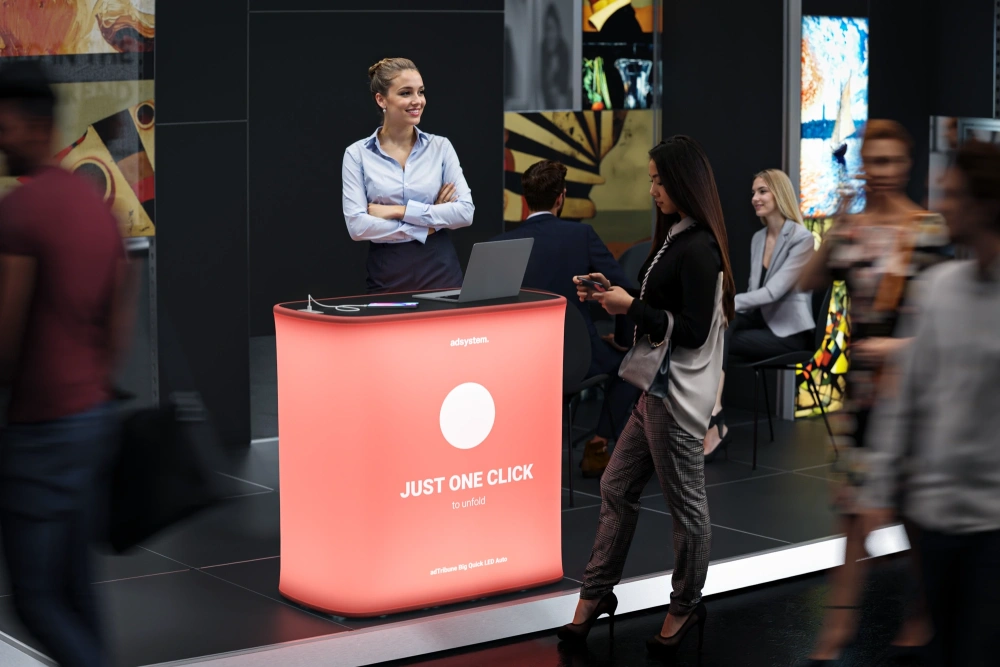
In LED counters, rigid panels are replaced with textile material designed for backlighting. As a result, light is distributed evenly, without hotspots or dark areas, and the graphics look consistent and refined from every angle. This material works better with hall lighting and keeps the message readable even in challenging lighting conditions. Light also organizes the perception of the booth. It defines the center and shows where to begin the interaction. For visitors, it’s a clear signal; for the team, real support in attracting conversations.
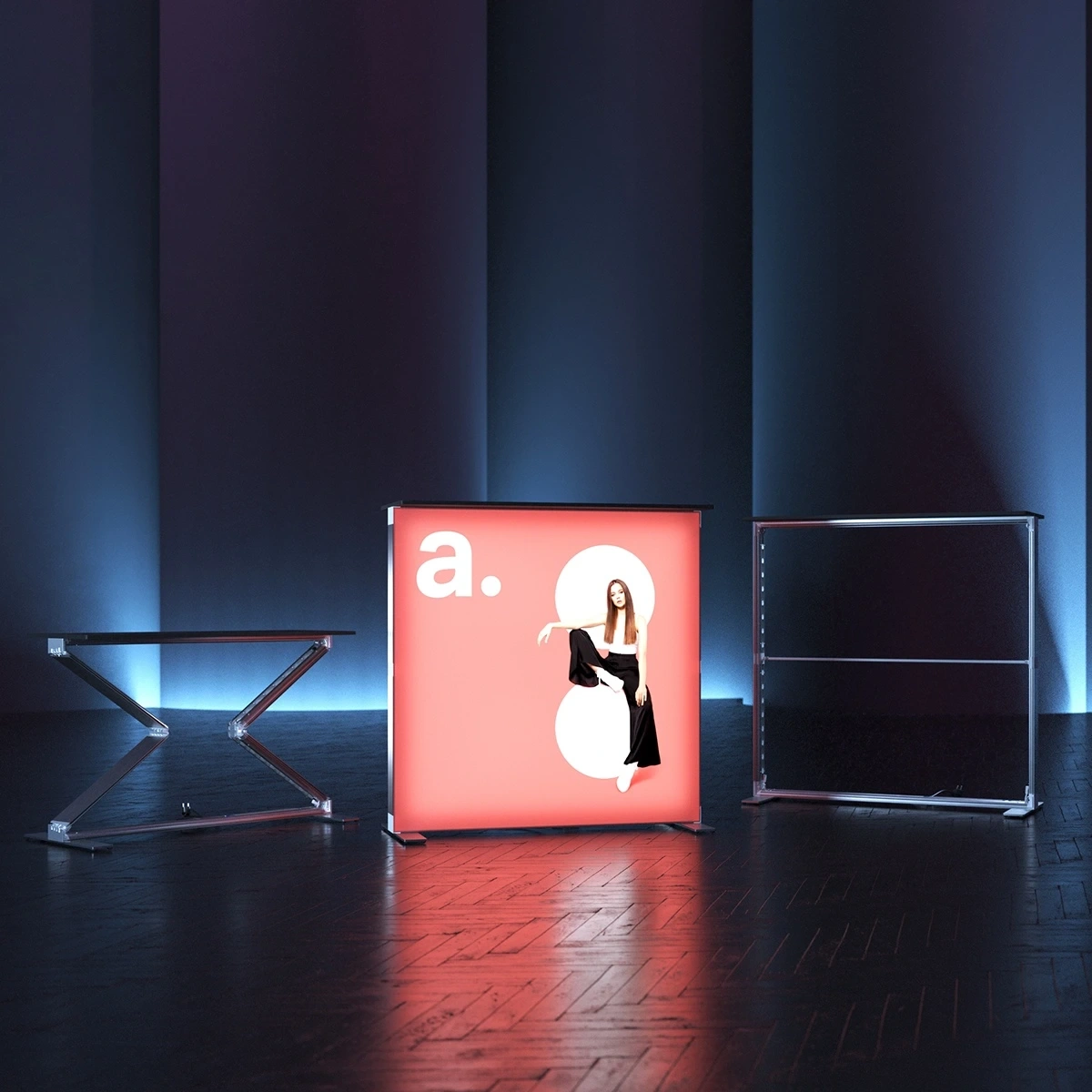
The differences are also visible in the construction itself. LED counters have a more furniture-like character and are designed as a fixed point of the booth, which is why they don’t come with wheels. In return, we offer various assembly methods – from models assembled manually without tools to solutions that unfold with a single click. There are also versions with additional RGB LED frames, which can be set to any color and matched to brand identity or the mood of the event. This makes it easier to adapt the counter to the character of the booth, rather than forcing the booth to fit one rigid solution.
From trade fairs to receptions – where do LED counters work best?
Most often, LED counters appear at trade fairs and industry events. That’s where their backlighting makes the most sense, as it has to compete with intense hall lighting and a large number of neighboring booths. In such conditions, an LED counter clearly marks the brand’s contact point and helps visitors quickly understand where they can approach and talk.
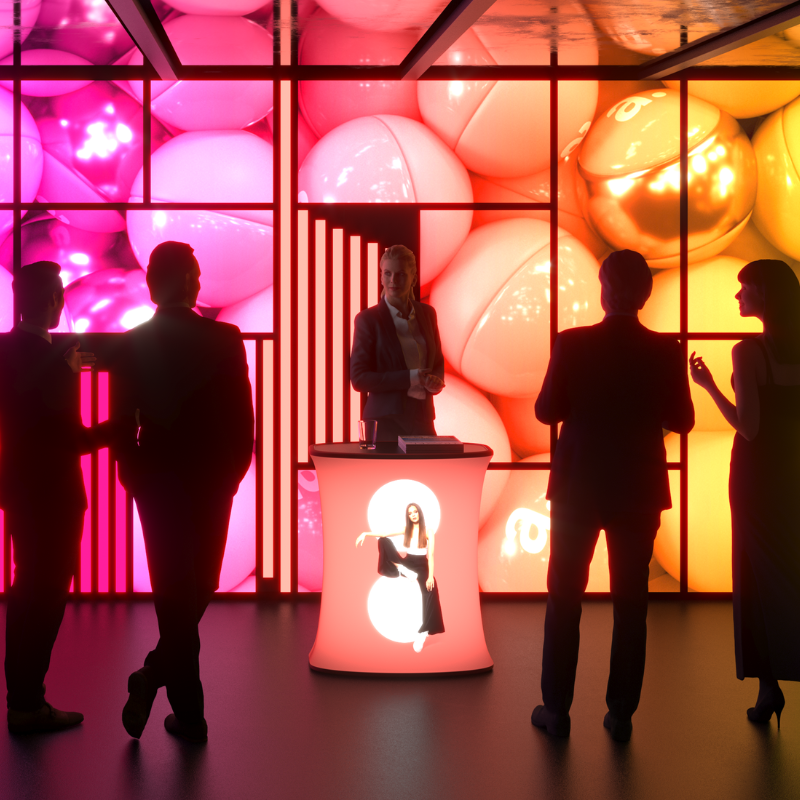
But LED counters are increasingly used outside the typical trade fair context as well. In receptions, showrooms, or entrance areas, they serve as an aesthetic welcome point. Backlit graphics organize the space and strengthen brand identity without the need for additional display systems. It’s a solution that looks good every day, not just during events.
LED counters also appear at conferences, product launches, and corporate events. There, they function as registration desks, information points, or bases for short conversations. Thanks to their form, they fit easily into different layouts and don’t dominate the space. Instead of acting as temporary furniture, they become a cohesive element of the entire event setup.
How to choose an LED counter for your booth? A short decision-making checklist
First, it’s worth answering one question: what role should the counter play? A model for quick conversations at a busy booth will differ from one intended for a calm reception area. Booth size and traffic intensity matter here.
The next decision concerns the type of construction. For frequent travel and fast setups, more mobile models work well – such as pop-up counters, inflatable counters, or those that unfold with a single click. Their advantages are quick assembly and convenient transport. For one-off projects, longer events, or permanent displays, models with a more furniture-like character perform better, becoming a stable and clearly defined point in the space.
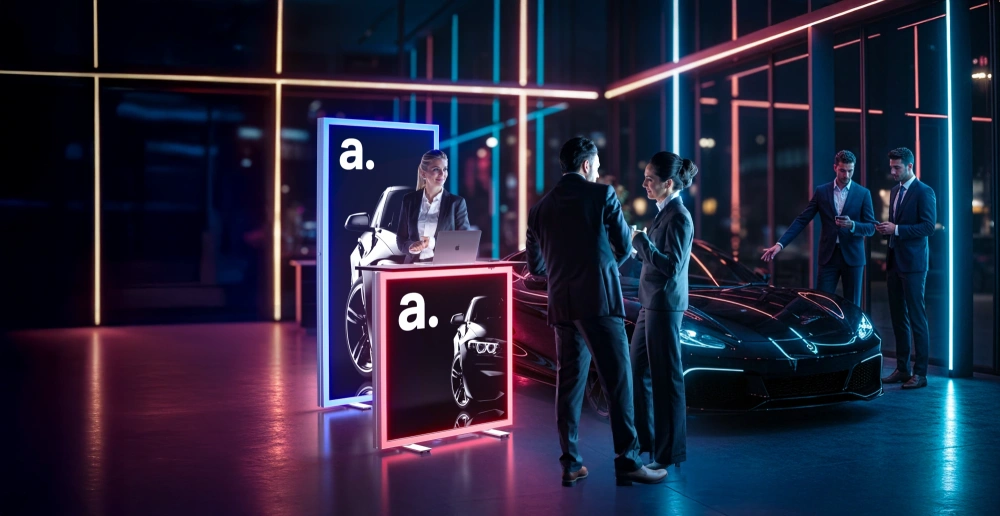
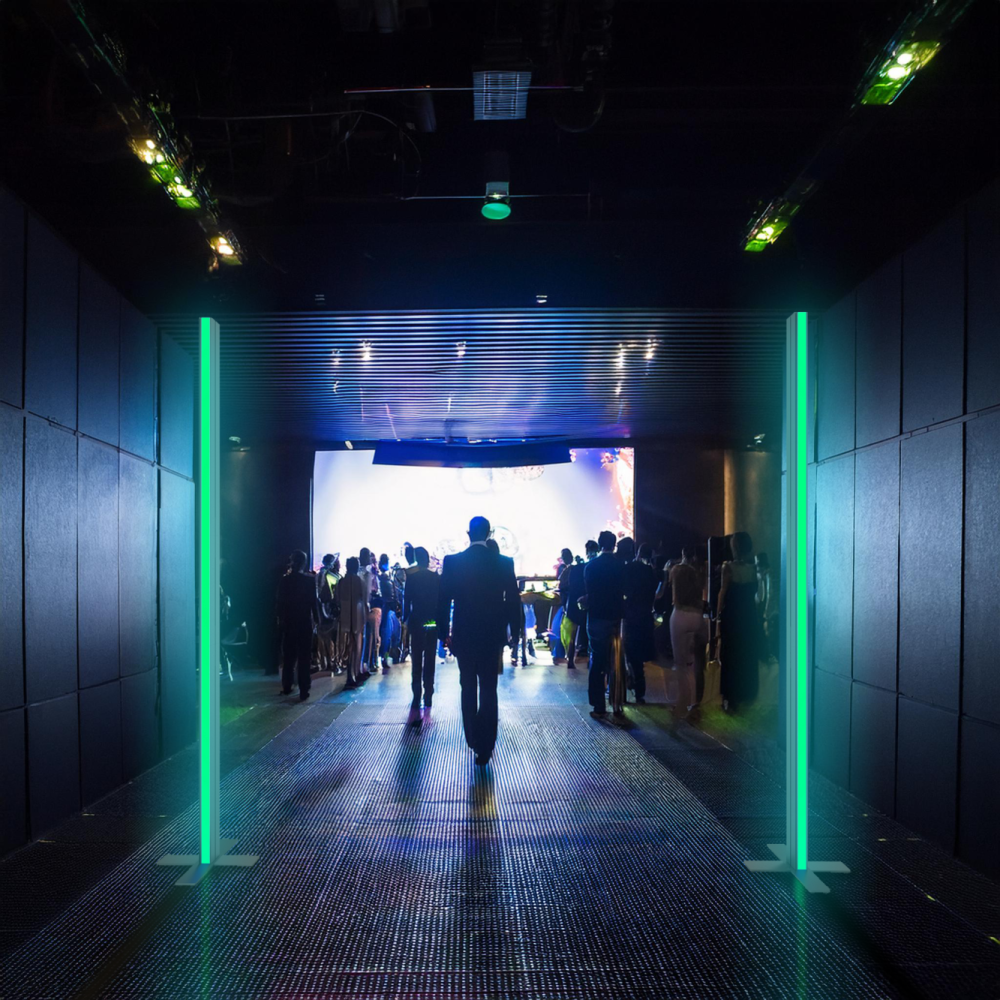
Finally, it’s worth looking at the counter as part of a larger set. It works well both with full trade fair booth constructions, where it serves as a contact point, and with a single LED lightbox, creating a compact mini-zone. Another way to achieve a cohesive visual effect is the Lumina series – the counter, lightbox, and brochure stand from this family stand out thanks to double RGB LED lighting. You can combine them into one illuminated composition and set the backlight color according to your vision.
Summary – a simple tool with a big impact on booth perception
A promotional counter doesn’t take up much space. It doesn’t complicate logistics. Yet it can change how a booth is perceived. It improves visibility, organizes the space, and makes the first contact with the brand easier.
A well-chosen counter supports the team’s day-to-day work at events – helping start conversations and reducing distance. It shows visitors where to stop.
In the offline world, details matter. An LED counter is one of those elements that works from the very first second. Quietly, effectively, and exactly where the relationship with the brand begins.


- CountersLED counters as a brand touchpoint
A promotional counter is often treated as an add-on to the booth. Something that “has to be there” because brochures need a place. Meanwhile, it’s right at the counter that the first, most natural contact with the brand happens. If it doesn’t do its job, it’s hard to expect a longer conversation. What makes a counter genuinely support interaction with visitors? See how to choose a counter for your booth so it works together with the rest of the display.
Read more
- LightboxDisplay wallsCounters
 From roll-up to lightbox – what does your brand need?
The offline world gives brands a unique chance to stand out. But to succeed, you first need to find your way among various exhibition systems. Roll-ups, walls, counters, lightboxes – the options are many, and each serves a different purpose. That’s why it’s worth treating them as parts of a single setup rather than as isolated props. Only then will you create a consistent experience that ensures no one walks past your brand unnoticed.
Read more - Counters
 How to choose a promotional counter? Tips and advice
If you're preparing for a trade show, conference, or another event, you know how important it is to stand out from the competition. Advertising counters are a key element of successful promotional campaigns – lightweight, mobile, and fully customizable, they provide you with a tool to build relationships with customers and enhance your brand image.
Read more - Counters
 A new standard in setup: Big Quick LED counter
Trade shows and industry events require solutions that are quick to use, convenient, and visually appealing. The adTribune Big Quick LED counter meets all these criteria. It sets up in just 3 seconds, and the built-in LED lighting enhances your brand message. Get ready in a flash – leave a lasting impression.
Read more